I specialize in repairing knives with chipped edges and broken tips.
Regardless of the repair, it is a joy to bring these tools back to full, safe function again.
My ability to work on pocket or folding knives is very limited due to the fact it is not very practical for me to replace any of the moving parts or springs. But usually most blade repair work I can tackle, short of replacing the blade itself.
Here is a non-exhaustive list of the types of repairs, detailing and/or alterations, I offer:
- Regrinding broken blade tips
- Regrinding chipped or dented blade edges
- Serration removal
- Blade surface rust removal
- Blade scratch removal
- Blade coating removal
- Blade Refinishing (no high mirror polishes)
- Machine satin finish
- Hand satin finish
- Cold bluing
- Patina
- Mustard finish (mottled patina finish)
- Sand blasting
- Fittings polishing (pommel, guard, bolsters)
- Handle re-sanding and finishing
- Re-profilling grind of blade
- Basic cleaning
- Lubing action
- Heel or bolster regrinds on kitchen knives
- Handle replacement (only in specific situations, please inquire)
- Sheath leather
- Cleaning
- Re-conditioning
- Re-stitching
Below are a few selected examples of repairs I have completed for clients.
Pocket Knives
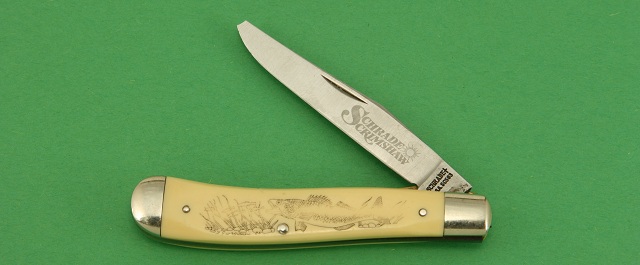
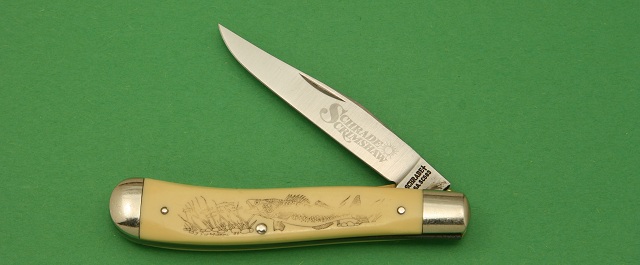
This Schrade trapper pocket knife had a broken tip. With the tip reground and some small rust spots removed, this pocket knife was back in service again.
Anoth
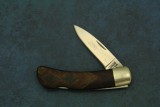 er pocket knife with a broken tip, this time a Camillus lock back,with a very nice wooden handle. Soon it was almost good as new.
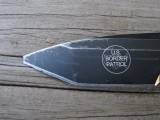
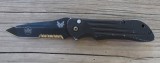
This Benchmade 9100 Auto folder was very special to the client, who had earned it while on the job. It had been her daily companion until its tip got broken. She wasn’t sure it was repairable but I got it taken care of and she was very happy to have a functional companion again.
A fair amount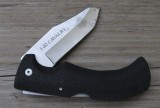
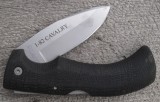 of the tip of this Gerber Gator pocket knife was broken off. An early attempt to repair it was evident. I came up with a repair that returned it to functionality, although it looks a little runty now…the client was very happy to have a working knife again.
Kitchen Knives
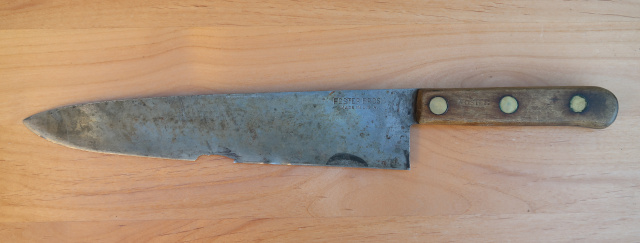
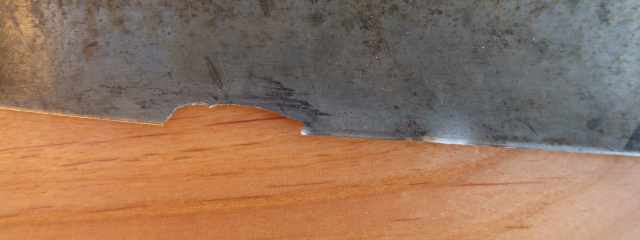
This classic old Foster Brothers Chef knife came in with some significant damage to the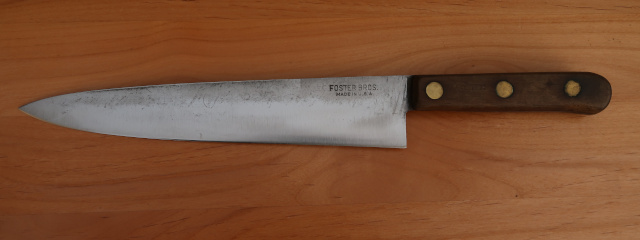 edge; a rather large section had been broken out. After regrinding the primary bevel and giving it a satin finish, it was back in service again.
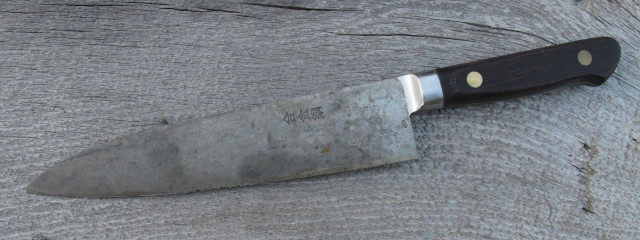
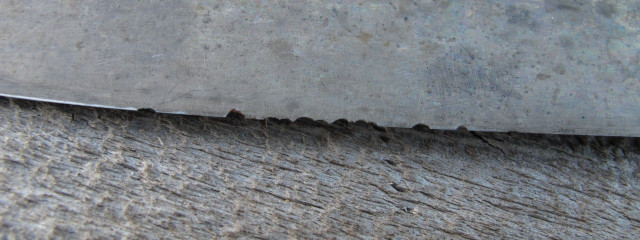
An older Gyuto with subtle but significant damage to the edge. Numerous small chips along the edge made the knife less functional. 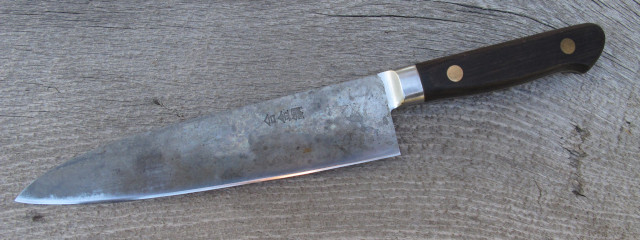
The chips were small enough that I had to remove minimal metal to make it usable again. This way I was able to preserve the wonderful old patina on the blade.
This is a very typical repair. A client brings  me a Chef’s knife with the last inch or so broken off and I repair the tip so the knife will have a point again. Many kitchen knives from Japan have a tip profile identical to this, so it I think it works well aesthetically; at least better than looking at a broken tip.
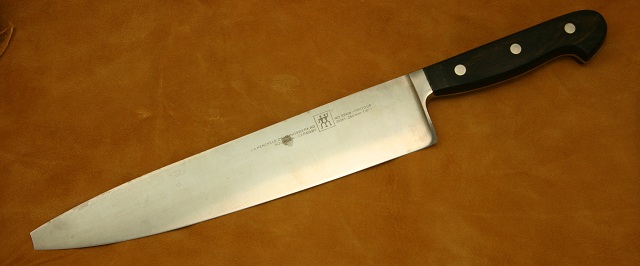
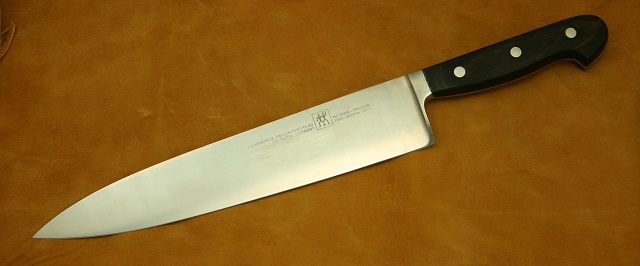 Sometimes, if only a small portion of the tip is broken off, I can regrind it so the knife has the same profile it had when it was new, only slightly shorter.
 A common repair, replacing handle slabs. This particular Wustof Trident chef’s knife has a 16” blade on it (yea, it is a big one) and was used by a pizza maker for cutting pizzas. The slabs had cracked and split and needed to be replaced. The new slabs are straight-grain cocobolo. I was told by a knife purveyor that only 100 of these particular blades were ever made.
Outdoor & Other Fixed Blade Knives
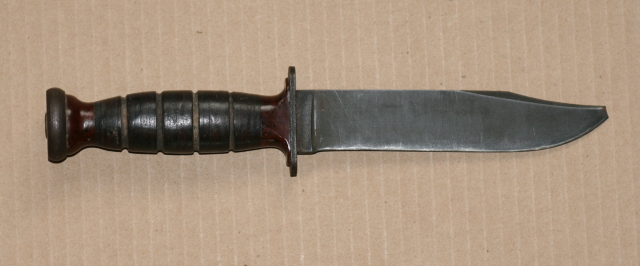
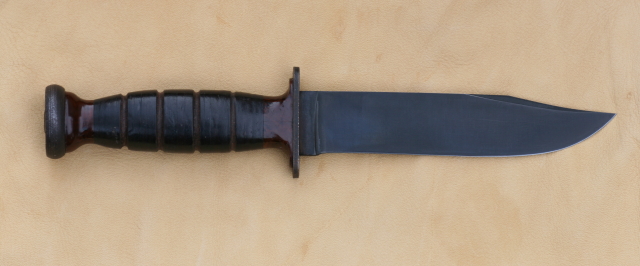 An early Ka bar fighting utility with a broken tip. Note the full flat ground blade, very different then the current ones. The current saber-ground models don’t cut nearly as well as this older one does, due to the primary bevel angle, but that also made the older ones more likely to break at the tip since they were thinner. Once I finished the regrind I re-blued the blade to match it’s original appearance.
This older Camillus USMC marked fighting utility (often called simply a “Ka bar”) was a cherished family heirloom. Unfortunately it was accidentally broken where the blade meets the handle. 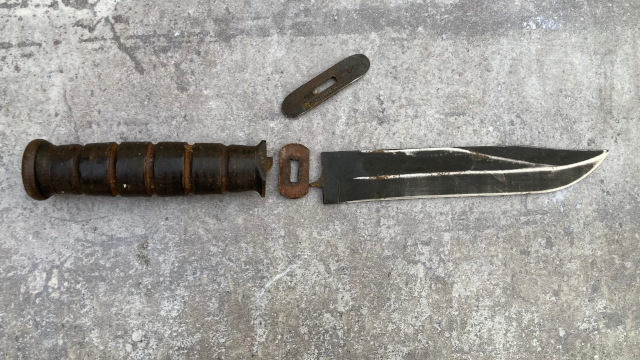 This repair required a gentle full disassembly, carefully welding the two parts back together and then reassembly of all the parts. All original parts were able to be reused. This kind of repair is tricky. The act of welding the two parts back together, will affect the heat treatment of the knife, at least in that area, regardless of how much effort is made to localize the welding heat to as small an area as possible.
 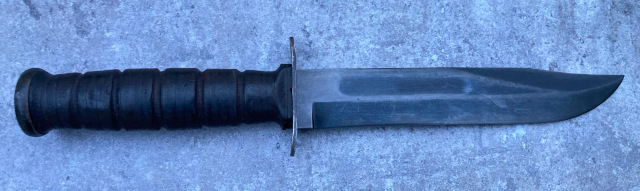 This must be understood before embarking on a repair such as this. With this understanding, the repair was a success.
A nice older Randall which had suffered some unfortunate accident. This project was a bit of a challenge since a good p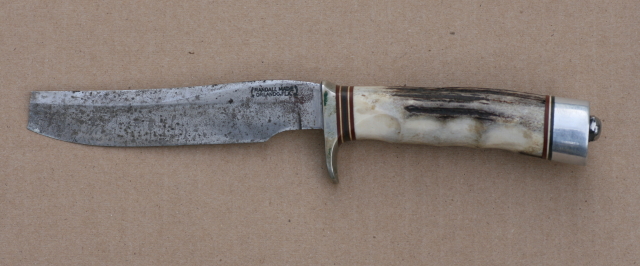 ortion of the tip was missing and there were several angles and curves to bring together. The client wanted a light patina added to the blade for a margin of protection. I really enjoyed this project; a beautiful older knife that was a ch
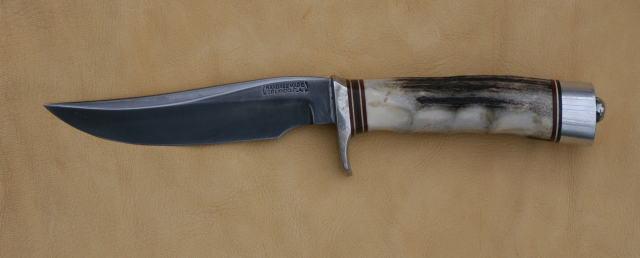 allenge to work on.
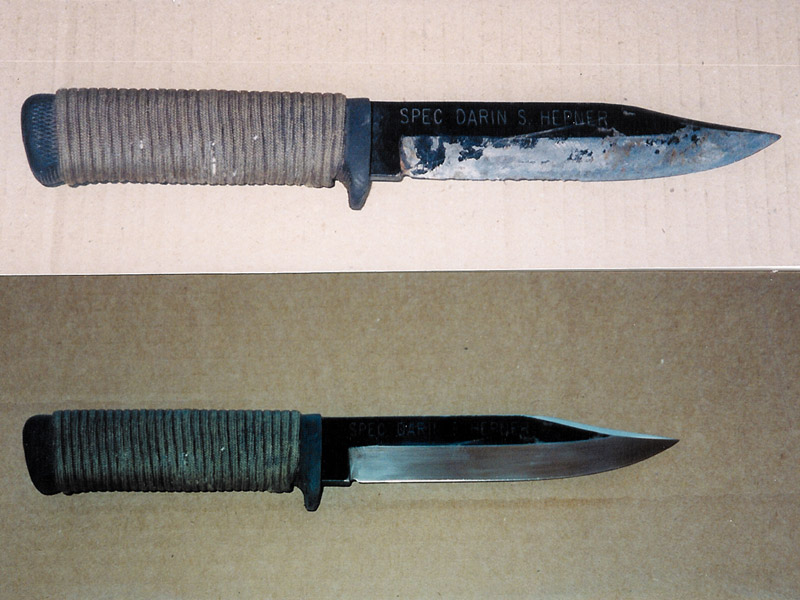 This knife (a Cold Steel SRK) was presented to a client when he was in the National Guard. While hunting he killed a blacktailed deer and when butchering it proceeded to use this knife to try and break the pelvic bone. I don’t recall if he got through the bone, but it did a number on the edge of the knife. A small portion of the tip was also broken off. So I reground the bevels on each side with a slight convex grind, just in case he wanted to hack up anything else, and fixed the tip. The sad thing is, the next fall he was hunting with this knife and lost it in a brushy creekbed.
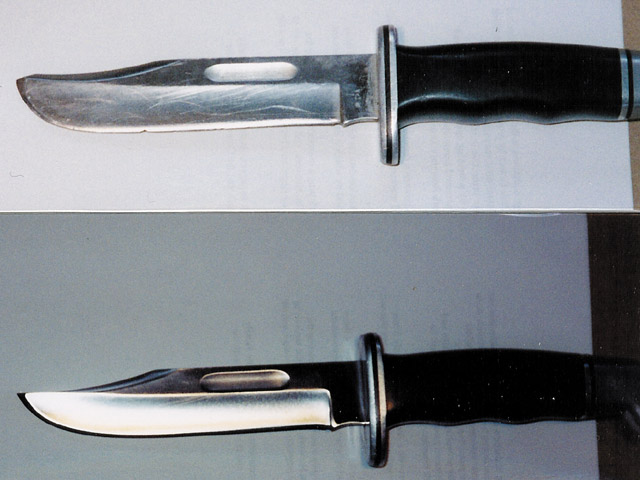 This is an old Buck Special that the client had broken the tip off of and then attempted a repair himself. There were also a few large chips in the edge and many scratches on the blade. It came out well. There were a lot of different angles to get right.